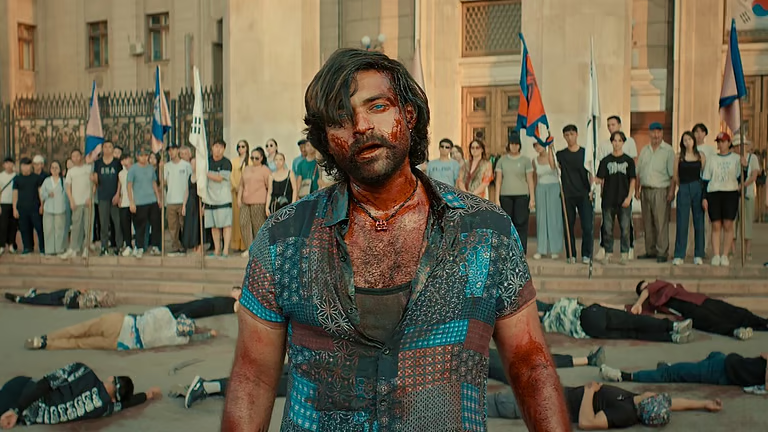
Hyderabad, India – Director Merlapaka Gandhi’s Korean Kanakaraju arrives with a near-perfect premise for a horror comedy: the spirit of a South Korean kingpin possesses a temperamental Telugu man in Anantapur. The cultural clash between Seoul and Rayalaseema promises wild, absurdist fun. Yet, despite a few mild laughs and some interesting early moments, the film ultimately delivers no real scares and a bloated, formulaic experience that squanders its potential. The reality is more of an excessive, reductive repurposing of ideas and action set pieces we’ve seen before.
The film introduces Kanakaraju (Varun Tej), a Bhajan troupe singer and alcoholic, and his friend Kistappa (Sathya), who runs a photo studio. Their village life is disrupted by the arrival of Chaitra (Ritika Nayak), a Korean-speaking K-pop fan who works at the local KIA plant. This provides Kanakaraju’s first connection to South Korea, a small glimmer of authenticity. The second connection comes when the ashes of a South Korean gangster are transported to Anantapur, and the ghost possesses Kanakaraju. The film’s early moments, with the ghost’s ashes changing hands in a campy manner, hint at a promising absurdist tone. However, this tension dissipates quickly as the first act focuses on a problematic romance involving stalking and entitlement.
The film’s biggest flaw is its failure to fully embrace its absurd premise. Some organic laughs emerge when Kistappa leverages the communication gap between the Korean-speaking ghost and the Rayalaseema clan, and Kanakaraju’s feral transformation before the interval shows some teeth. But once the ghost is given an identity, the intrigue is lost, and the film devolves into a formulaic action drama.
Must Read: Yash on ‘Toxic’: ‘This Film Happened Because Successful People Kept Their Egos Aside’
The narrative then follows Kanakaraju to South Korea, where the little interest generated crumbles. The action shifts from absurdist horror to inane revenge, with a Korean flag in almost every scene and Sathya suddenly wearing a kimono (despite it being a Japanese garment). As the race against time unfolds, the film becomes a chore, and one can’t help but wish they could escape the bloated, toothless comedy.