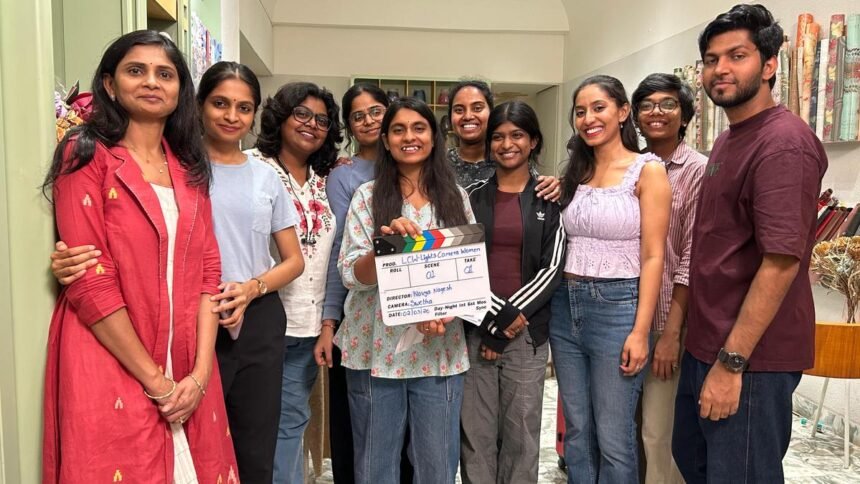
Breaking into the film industry has always been tough. For women, it has been tougher. A new initiative called ‘Lights, Camera, Women’ (LCW) aims to change that by creating a dedicated networking and mentorship collective for female cinema aspirants.
Launched earlier this month in Mumbai, the collective has already signed up over 300 members ranging from film students to assistant directors and screenwriters.
What is Lights, Camera, Women?
LCW is not a production house or a film school. It is a membership-based networking collective that connects aspiring female professionals with established women in the industry.
Founder and filmmaker Aditi Sharma, whose documentary ‘The Unseen Frame’ won national award in 2024, started LCW after facing her own struggles in getting a break.
“I had a film degree, a good script, and zero contacts. Every door I knocked on, the first question was not about my story but about who I knew. I decided to build the door myself,” Sharma says.
What the collective offers
LCW provides three core services:
Mentorship matching – Senior cinematographers, editors, and producers volunteer to guide up to three mentees each for six months.
Monthly pitch sessions – Members can pitch their short film or web series concepts to a panel of independent producers. The best pitch gets ₹5 lakh in seed funding.
Directory access – A searchable database of female technicians, writers, and directors available for hire. Production houses can browse the directory for free.
The gender gap in Indian cinema
The need for such a collective is stark. According to a 2025 FICCI-EY report, only 12% of directors, 8% of cinematographers, and 15% of screenwriters in mainstream Indian cinema are women.
In technical roles like sound design and editing, the numbers drop below 5%. The situation is slightly better in regional and independent cinema, but the gap remains massive.
“Men hire men because that’s who they know. It’s not always intentional bias. It’s a network gap. LCW closes that gap,” Sharma explains.
Success stories already emerging
Within a month, two LCW members have already benefited. Bengaluru-based sound designer Priya Menon found a mentor who helped her get her first feature film assignment. Kochi-based writer Aparna Nair’s short film script was picked up for production through a pitch session.
“Two weeks ago, I was sending cold emails. Today, my script is in pre-production. I didn’t even know such a collective existed. Now I can’t imagine working without it,” Nair says.
Expanding to other cities
Sharma plans to expand LCW to Chennai, Bengaluru, and Kolkata by the end of 2026. A digital version of the mentorship programme will also be launched for aspirants outside metropolitan cities.
The collective is currently funded through member fees (₹2,000 per year) and a small grant from the Women in Film and Television Association.
Challenges ahead
Sustaining the collective beyond the initial enthusiasm is a challenge. “Volunteer mentors have busy schedules. We need to ensure quality and consistency. Also, funding for the pitch prizes needs to be secured on a quarterly basis,” Sharma admits.
She is now in talks with streaming platforms to sponsor the pitch programme in exchange for first-look rights for the winning projects.
How to join
Aspiring members can apply through the LCW website. Selection is based on a statement of purpose and a portfolio of work – no formal film degree required.
“We don’t care about pedigrees. We care about passion and talent. If you have a story to tell, we will help you find the way to tell it,” Sharma says.
For thousands of women who dream of being behind the camera, Lights, Camera, Women might just be the spotlight they have been waiting for.