Kolkata, India – Early this year in Kolkata, while examining India’s pluralism and multiculturalism, a panel of elite speakers mentioned several literary and cultural icons of Bengal, including Rabindranath Tagore and Satyajit Ray. But one name—Kazi Nazrul Islam—was curiously missing from the list. Political scientist and author Mujibur Rahman, who was in attendance, took note of this omission and decided to make amends by organising a discussion on the life and legacy of Nazrul at the India International Centre in Delhi ahead of the ‘Bidrohi Kobi’s (rebel poet) death anniversary on August 29.
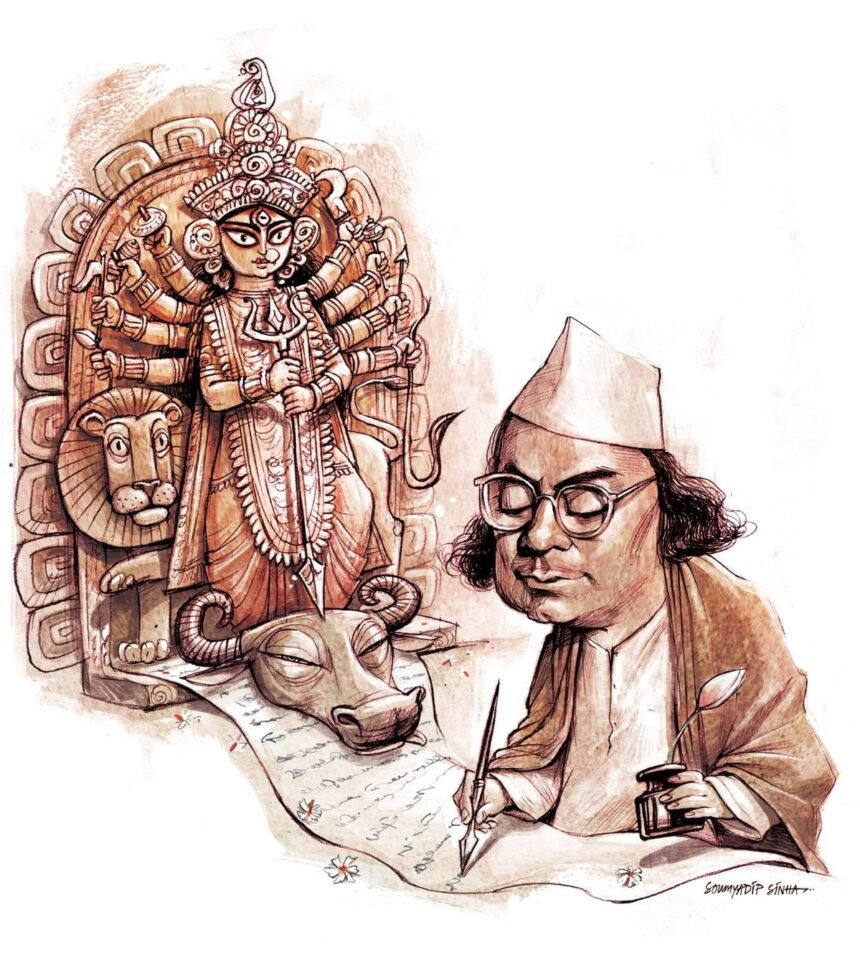
The article highlights Nazrul’s unique contribution to Bengal’s cultural fabric, particularly his Agomoni songs, which are an integral part of the Durga Puja season. These songs, part of the vast canon of Nazrulgeeti, welcome the goddess Durga each autumn while conveying powerful social and cultural messages that transcend mere devotion. Nazrul’s work embodies the syncretic traditions of Bengal, where Hindu and Muslim cultural expressions have historically intertwined. His Agomoni songs, composed in the 1920s and 1930s, remain popular during the Durga Puja festivities, bridging religious boundaries and celebrating a shared cultural heritage.
The piece notes that Nazrul’s omission from the panel discussion reflects a broader trend of forgetting his contributions to India’s pluralistic tradition. His legacy as a poet, composer, and revolutionary who championed both spiritual devotion and social justice deserves renewed attention, especially in the current climate of cultural and political polarization. The discussion organised by Rahman served to restore Nazrul to his rightful place in the pantheon of Bengal’s—and India’s—greatest cultural icons.