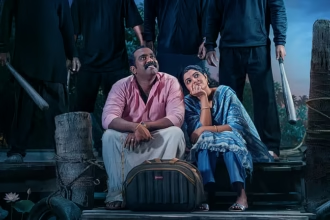
Thiruvananthapuram, India – Ramith Kunhimangalam’s short documentary It Was Here Before Our Time places itself in a liminal space, where Maari Theyyam transitions from an art form bonding people to ultimately evolving into a spectacle or public event. This idea motivated the creator to document Maari Theyyam as a homage to what it stands for, until time takes over. The documentary has been included in the Focus Short Documentary category at the ongoing 18th International Documentary & Short Film Festival of Kerala (IDSFFK) and was screened at the Sree theatre on Sunday.
“It is rooted in the place I am from. Maari Theyyam is different from other Theyyams in that it does not boast the opulence of those forms,” says Ramith, who is from Kannur. Unlike most Theyyams, Maari Theyyam is performed during the Malayalam month of Karkadakam, the monsoon season, often associated with scarcity and illnesses. Madayikkavu in Kannur, where the Theyyam is based, is believed to be doomed with 101 curses. Maari Theyyam, also known as Karkadaka Theyyam, is performed by members of the Pulaya community, usually consisting of six artistes, each playing a different character.
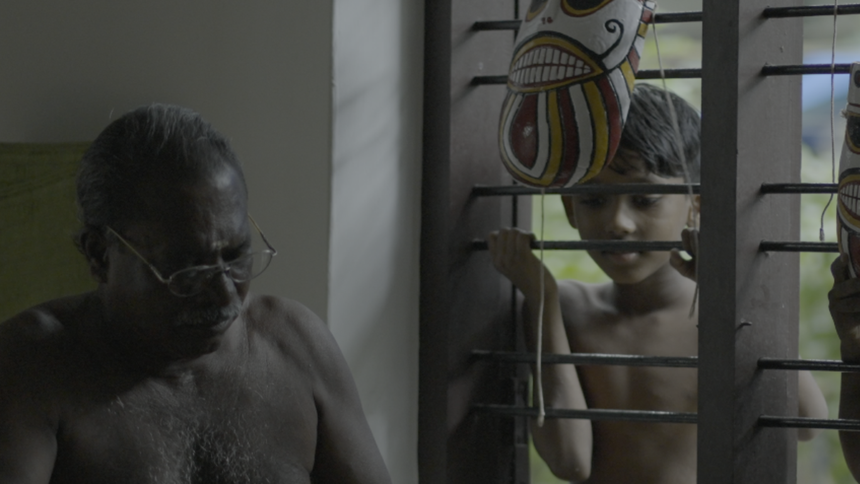
Ramith attempts to depict the art form with a sense of aesthetics, which he believes was absent in most of the visual documentation about Maari Theyyam. “The Theyyams do not walk on a fixed path because it is believed to be blind and deaf. They take a route they like. I wanted my visuals to interact with nature,” he says. The painted wooden mask and light green palm-frond frills present a stripped-down version of Theyyam, without compromising on details. The film is shrouded in shades of grey as an ode to the overcast conditions, with rain playing an important role.
Must Read: Virat Kohli Completes 15,000 Runs in ODI Cricket, Only Second After Sachin Tendulkar
The documentary, produced by actor-director Rajesh Madhavan, oscillates between conversations with different stakeholders in the art form and the performance itself, cautiously zooming in on the daunting depiction of Maari Theyyam while explaining it from a human perspective on the divine. Ramith, a fine arts graduate, says capturing something so unpredictable requires a lot of planning. “I had done my share of research, talking to people, going to locations, marking possible routes and setting up frames in my mind.” The documentary attempts to stop time from changing Maari Theyyam. “There’s nothing much that can be done about this. I did this film now to show Maari Theyyam with as much integrity as I can before it evolves into something else,” he says.