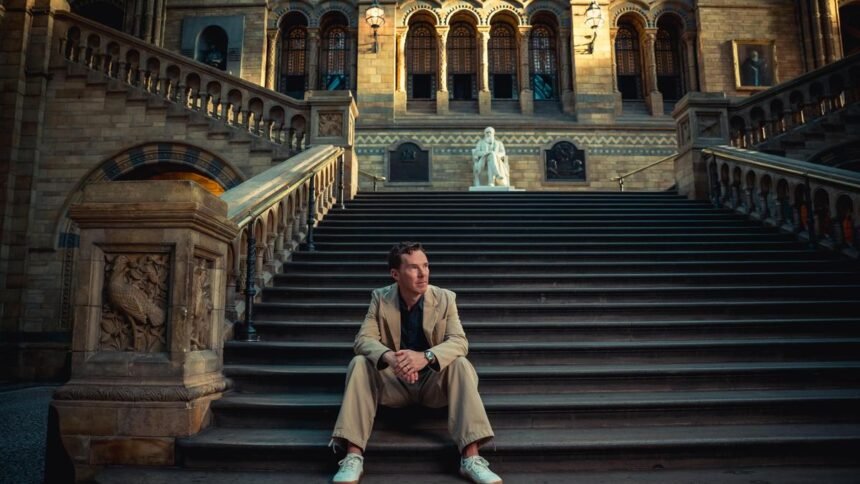
London, UK – Benedict Cumberbatch is possibly the only person who can get away with using a word like “trepidatious” in conversation. The actor, who captured our collective imagination as Sherlock and has gone on to comfortably inhabit the MCU, used the word when talking about presenting How to Live on Earth. The Open Planet documentary premiered on YouTube on September 20. Speaking over a video call from London, Cumberbatch says the question, “How to live on Earth?”, fascinated him. “I wanted to find out. I’d worked with Fredi [Devas, director] before on a documentary about the Antarctic, which I did the voiceover for in New Zealand during the lockdown in 2020.”
It was when he read the script that Cumberbatch felt “slightly trepidatious because there is really only one presenter of natural history documentaries, Sir David Attenborough. I was keen not to tread on those heels or be lost in trying to be that person.” How to Live on Earth is a very different flavour and character, the Dr. Strange actor says. “It drew me in with its humour, and also the revelations of the three-pillared approach that subtitled the film, which is ‘How to Feed the Future’, ‘How to Value Nature’ and ‘How to be Human’.”
Executive producer Jonnie Hughes says Cumberbatch was the right choice because they wanted to take a different tone with the story. “It needed to reach into people’s hearts and minds. Benedict’s back catalogue is perfect in terms of global reach. He has the air of a storyteller with an intellectual argument.” The documentary’s use of experts includes wildlife filmmaker and explorer Dan O’Neill, climate justice activist Xiye Bastida, and former White House chef and senior policy advisor on nutrition Sam Kass, who helped Cumberbatch present with authority. “They are extraordinary and I felt bolstered for the part that I play. I’m not a policy expert, a scientist or a biologist. It’s key to me that I feel what I’m saying is backed up by those in the know,” he says.
Making the film changed Cumberbatch’s relationship with the natural world. “It turbocharged my understanding of it. For example, I know that interacting with Nature is good for mental health and for Nature, and seeing the prisoners interact with the turtles underlined it. I know that if you allow Nature to thrive, it comes back online with its own solutions.” Seeing the emotion of the tribespeople on the removal of the dams on the Klamath River and the return of the salmon was particularly moving. “Every time I’ve watched that sequence, I’ve cried. The emotion is so transparent and potent, that it reaffirms my hope and belief that we do have enough humanity amongst us to make a difference.”
Must Read: Dhanush Receives Special Mention for ‘Captain Miller’ at 72nd National Film Awards
We are a part of Nature and not apart from it, Cumberbatch says. “The lesson has been lost, in rapid urbanisation, 200 years of capitalism, the rapid increase of automation, the separation of you and I.” It has become useful, he says, to think of ourselves as units in a factory. “It’s all about a drive to productivity and unsustainable growth. We’re now putting the brakes on. What is valuable goes into the bigger picture of who we are as human beings.” Making How to Live on Earth free to watch was a conscious choice. “It’s a completely democratic, open-source piece of material to inspire, provoke and call people to action. It’s very rare that you’re not worried about box office revenue.” How to Live on Earth is streaming on YouTube.