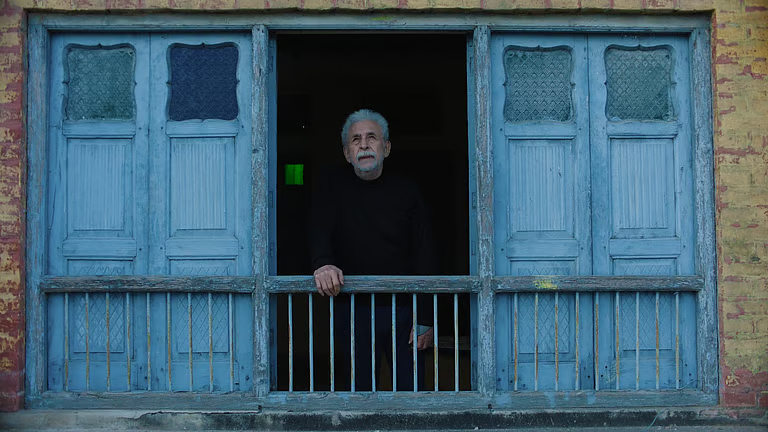
Locarno, Switzerland – Naseeruddin Shah delivers a quietly powerful performance in Gurvinder Singh’s Rehmat, a film that reclaims the plurality of Punjab. Premiered in the main competition of the 79th Locarno Film Festival, the film is a tranquil yet profound picture of India’s most storied region, where an old stranger’s homecoming becomes a symbol of lost secularism and shared humanity. Based on short stories by Ajeet Cour, the film weaves together three narratives: the grief of a family whose young man, Keshav, has disappeared; the trauma of another family missing its young father, Balwinder; and the journey of Rashid Ali (Shah), a British national of Indian origin who returns to his ancestral village.
Rashid Ali arrives in the village of Gujjarwal, claiming to be God at first, before revealing his true identity. He fits in as if he never left, yearning to repair his own rootlessness. The film’s quiet tussle is between traditional compassion and modern conflict. The authorities, who represent social and political divides, scold Rashid and his hosts for trusting each other, imposing tales of division.
Rashid serves as a human manifestation of old-school secularism, fading over time. The three threads—the grief of Keshav’s family, the trauma of Balwinder’s family, and Rashid’s sense of belonging—thrive on an inherent warmth and dignity beneath the tensions.
Must Read: ‘Ted Lasso’ Season 4 Premiere Review: A Comforting Homecoming in Need of Fresh Legs
The film’s tone is set in its opening shot: a young woman’s tears while chopping onions become actual emotions, conveying how pain and caregiving speak the same language. The villagers refuse to forsake the civility of their ancestors, sheltering a stranger despite establishment pressure. Their compassion defies the mainstream impression of a place reduced to faultlines. The camera floats within homes, capturing the presence of those perished and the generosity of everyday life.
Diya Kamboj is striking as a bereaved sibling, while Suvinder Vicky undoes the toxicity of his usual roles, looking at Rashid with respect and humility. Naseeruddin Shah’s performance, with a wonky British accent, morphs into a portrait of South Asian civilisation, creaking under the cancers of contemporary rhetoric. Rehmat is a story about people who reclaim the plurality of a culture, rise above volatility, and continue to build places with incomplete sentences and apolitical memories.