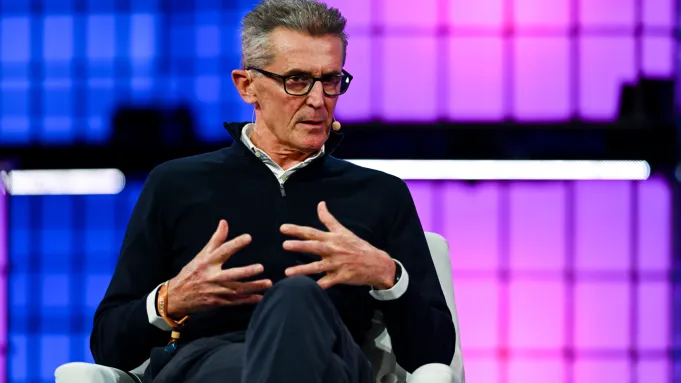
The head of the world’s largest independent TV producer discusses creating a television colossus, expanding beyond traditional formats, and whether ITV Studios is on his radar
Banijay Entertainment was already the largest independent television producer in the world. So it decided to get bigger.
Banijay’s mega-merger with fellow indie giant All3Media, completed this week, creates a true TV colossus. The new London-based production and distribution group brings together nearly 200 production companies and labels across 25 territories, including the companies that make and sell such shows as The Traitors, Big Brother, Survivor, MasterChef, Peaky Blinders and Black Mirror, some hundreds of thousands of hours of programming, and combined revenues of $8.5 billion.
Coming fast on the heels of the $2.1 billion offer by Comcast-owned Sky to acquire British commercial network ITV, the Banijay-All3Media deal is a further sign that traditional TV is scaling up in an effort to survive, perhaps even thrive, in a rapidly changing digital marketplace.
Why the Merger?
Banijay CEO Marco Bassetti is betting not only that the company can again scale up, as it’s done with previous acquisitions—of Zodiak Media in 2015 and Endemol Shine in 2019—but also that it can maintain its still highly profitable TV business while extending and expanding its reach into live events, sports and across social media.
“It was never about simply becoming the biggest,” Bassetti told The Hollywood Reporter. “Our ambition is to create the best home for creative talent—a place where producers can better monetize their intellectual property, distribute it around the world, remain independent, and feel supported.”
Scale Matters
“Scale is increasingly important because our industry remains fragmented,” Bassetti said. “But it’s important to understand what Banijay actually is. We don’t operate as one centralized production company. We’re a federation of creative businesses that retain enormous autonomy. We don’t tell producers which broadcaster to work with or what genres to make. They remain entrepreneurial.”
Size allows Banijay to provide financing, market intelligence, distribution, investment and help producers retain ownership of their IP. “Scale isn’t the goal in itself. It’s what enables us to better serve creative talent,” he added.
Beyond Traditional TV
Bassetti sees the biggest opportunities beyond television production. “We’re investing in extending our brands into live experiences, gaming and immersive entertainment,” he said. The company is launching theatre productions, developing a Black Mirror VR experience, expanding Peaky Blinders into new formats, and creating live events around brands like The Traitors.
Sport is another important growth area. Through Balich Wonder Studio, Banijay produced the opening ceremonies for the FIFA World Cup in the U.S. and Mexico, just as it worked on the Milano Cortina Olympic ceremonies.
Digital Monetization
Digital monetization is a major focus. “With our catalogue, FAST channels and enormous social media reach, we believe there’s still considerable upside,” Bassetti said. The merger brings All3Media’s social media agency and digital production company Little Dot Studios, giving Banijay a much stronger digital and social media capability.
What About ITV Studios?
With ITV Studios being spun off from the Sky-ITV deal, a new big target just came on the market. Bassetti said: “It’s far too early to talk about that. We completed this merger only hours ago. We need to, shall we say, digest this first, to execute this merger. But I think if there are new opportunities, we know our shareholders support our strategy.”
He added: “If there is a good opportunity for us, we’ll take a look. But right now, there is nothing on the table [regarding ITV Studios], so there is no plan there. Our immediate priority is integrating Banijay and All3Media successfully.”
The Secret to Successful Mergers
Bassetti said Banijay’s model can absorb new businesses without changing what makes them successful. “Producers in our ‘federation’ keep their identities and their entrepreneurial culture. Country managers support them, try to help them to focus as much as possible just on creativity, not on bureaucratic reporting.”
“Our business is IP and it’s people. You need to work with the people that feel comfortable working with you. All of us, including myself, come from production. We all come from the set, from the stage. We share that common experience. We speak the same language, we understand their challenges because we are all producers here.”