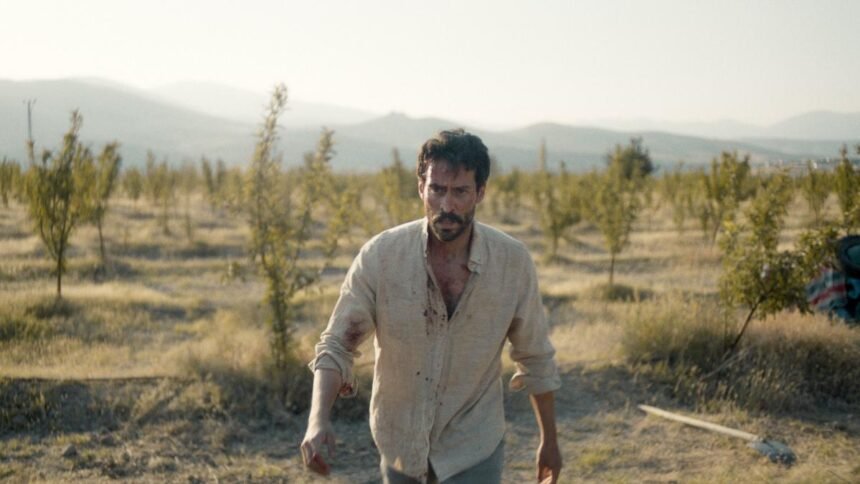
Iranian writer-director Alireza Khatami transforms a domestic mystery into a slippery slow-burn thriller with major trust issues around men who claim to have broken the cycle
Having spent much of his filmmaking career navigating the practical and ideological constraints of state censorship, Iranian writer-director Alireza Khatami has developed an elastic relationship with geography. His latest work, The Things You Kill, extends that philosophy by transplanting a script originally written in Farsi into an unnamed Turkish city after Iranian censorship made its original setting untenable.
The relocation feels more than a mere cosmetic disguise because Khatami has built the film around the very instability of translation and identity, making the history of its production inextricable from the drama unfolding on screen.
What the film is about
The film follows Ali Özdilek (Ekin Koç), a university lecturer who teaches translation studies while failing every performance of masculinity his social environment expects him to embody. His temporary academic contract faces cancellation, his fertility tests reveal an alarmingly low sperm count that he hides from his veterinarian wife Hazar (Hazar Ergüçlü), and his return from fourteen years in the United States has left him stranded inside a homeland that no longer feels capable of accommodating the version of himself that developed abroad.
The screenplay patiently constructs that machinery before introducing a destabilising rupture. Ali worries about his partially paralysed mother, suspecting his father Hamit (Ercan Kesal) has continued years of domestic abuse, and retreats regularly to an isolated garden whose failing irrigation system feels inseparable from his own infertility. When his mother dies under questionable circumstances, and a wandering labourer named Reza (Erkan Kolçak Köstendil) appears seeking work, Khatami gradually transforms this seeming family tragedy into something far stranger.
Influences and themes
The film soon begins speaking fluent Kiarostami, with frequent odes to David Lynch, often even inheriting Dostoevsky’s fascination with guilt as a self-generating force. Yet Khatami wears none of these influences as cinephile credentialism, since every surreal psychological rupture through his formal choices remains tethered to Ali’s steadily disintegrating consciousness.
A classroom lecture crystallises the film’s ambitions, where Ali explains that the etymology of translation historically implies carrying meaning across languages, while another linguistic root associates the process with destruction or killing, suggesting every successful act of communication simultaneously erases an earlier version of itself.
Visual language
Khatami’s aestheticism sustains that conceptual richness because Polish cinematographer Bartosz Swiniarski consistently denies us spatial certainty. Long static compositions trap characters inside windows and doorframes, with shifting focus redrawing their sense of authority within individual shots. One extraordinary mirror shot is so devilishly constructed that the review notes replaying it five times trying to reverse-engineer the trick.
The mirror represents a threshold where competing versions of Ali litigate ownership of the same life. Even the film’s most shocking turns retain an almost disquieting serenity, building dread through silence and measured blocking.
The performances
The film leaves the shouting to lesser thrillers, relying on tremendously restrained performances from Koç and Köstendil. Once the narrative abandons conventional Turkish realism, every destabilising revelation feels like the inevitable culmination of visual and psychological cues that have been gathering in plain sight.
The verdict
The film sometimes risks overdetermining its symbolism, particularly where infertility and inheritance converge. Yet even these metaphors continually complicate any straightforward interpretation.
Ali spends much of the film believing that patriarchy belongs to previous generations. He returns from fourteen years in America imagining that liberal education and self-awareness have permanently exiled him from his father’s violence, until Khatami cruelly demonstrates that merely recognising a system rarely prevents you from reproducing it.
The Things You Kill is available to rent or purchase on BookMyShow Stream.