Glory fits right into that popular OTT template where a murder or whodunit serves as the entry point, but the real focus is peeling back layers of a specific society, its pressures, dysfunctions, and cultural realities. Karan Anshuman, known for exposing cricket’s underbelly in Inside Edge and power struggles in Mirzapur, blends sports drama and crime thriller in a rustic flavour to tell a compelling tale with uneven outcomes.
The series explores the brutal ecosystem around boxing in Haryana, touching on parental ambition, family fractures, toxic masculinity, and the twisted idea of honour.
The Plot
| Aspect | Details |
|---|---|
| Setting | Shaktigarh, a boxing hub in Haryana (modelled on Bhiwani) |
| Inciting Incident | Mysterious death of a promising Olympic boxing prospect; brutal assault on his love interest |
| Central Conflict | Two estranged brothers return home to confront their rigid, medal-obsessed father |
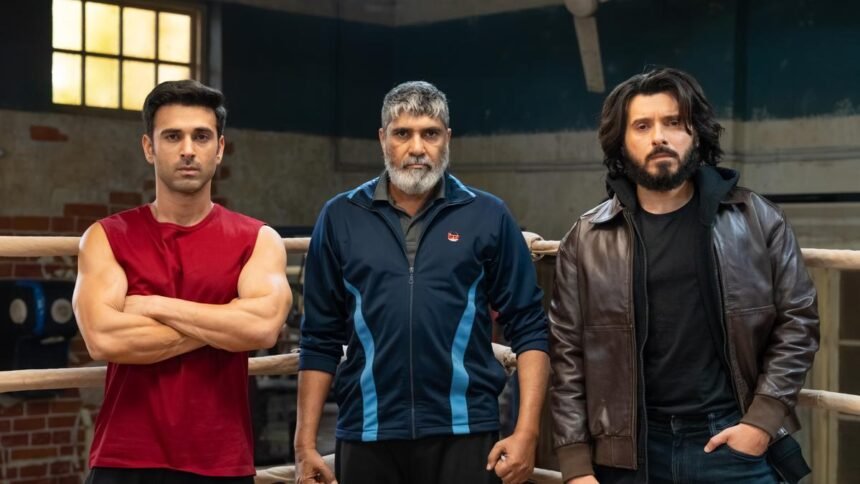
The brutal assault on their sister Gudiya forces two estranged brothers, Dev (Divyenndu) and Ravi (Pulkit Samrat), to return home. They confront their rigid, medal-obsessed father Raghubir Singh (Suvinder Vicky), a renowned but domineering boxing coach whose relentless pursuit of Olympic success has long fractured the family.
What Works
| Aspect | Verdict |
|---|---|
| Suvinder Vicky | Delivers a grounded, internalised intensity |
| Divyenndu | Carries a soft core beneath a vengeful, cynical exterior |
| Boxing Action | Sweat-drenched gyms and sharp jabs feel grounded |
| Background Score | John Stewart Eduri’s pulsating score makes it feel visceral |
| Kashmira Pardeshi | Quiet stance and direct gaze demand attention |
| Central Revelation | Genuinely revelatory |
The series takes a deep dive into societal undercurrents, exploring social evils festering beneath caste pride, honour killings, and a bride bought from Bihar to get over the sex ratio.
What Doesn’t Work
| Aspect | Critique |
|---|---|
| Performative Contrast | In presence of Suvinder, the boys look more theatrical when tackling dad issues |
| Tonally Uneven | Marriage between gritty realism and larger-than-life drama often feels forced |
| Creative Liberties | Takes noticeable liberties with amateur boxing rules to serve the drama |
| Safe Resolution | Retreats from subversive risks; killer’s motivation only superficially tethered to complex social terrain |
| Overkill | Kashmira’s character turned into a look-at-me persona |
| Gore as Spectacle | Graphic violence often functions as shock value rather than meaningful narrative punctuation |
The relentless urge to create a spectacle out of the specks of dust comes at the expense of seamless integration, resulting in a series with strong individual parts that doesn’t fully land as a cohesive whole.
The Performances
- Suvinder Vicky: An absolute chameleon; delivers grounded intensity
- Divyenndu: Munna of Mirzapur follows him, but carries the older brother’s soft core well
- Pulkit Samrat: More expressive and crowd-pleasing
- Kashmira Pardeshi: Demands attention with quiet stance and direct gaze
- Ashutosh Rana: Effective as rival club leader Viju Sangwan
- Yashpal Sharma: Plays a khap chief
- Sikandar Kher: Flashy mining mafia lurking in corners
The Verdict
Though the central revelation is genuinely revelatory, Glory ultimately retreats from the subversive risks promised by its opening act. The makers seem in two minds—they take a deep dive into societal undercurrents but at the same time want to treat the hinterland noir with Bollywood-friendly tropes.
This marriage between gritty realism and larger-than-life drama often feels uneven or forced. It’s a series with strong individual parts that doesn’t fully land as a cohesive whole.