Director: [Director’s Name Not Specified in Source]
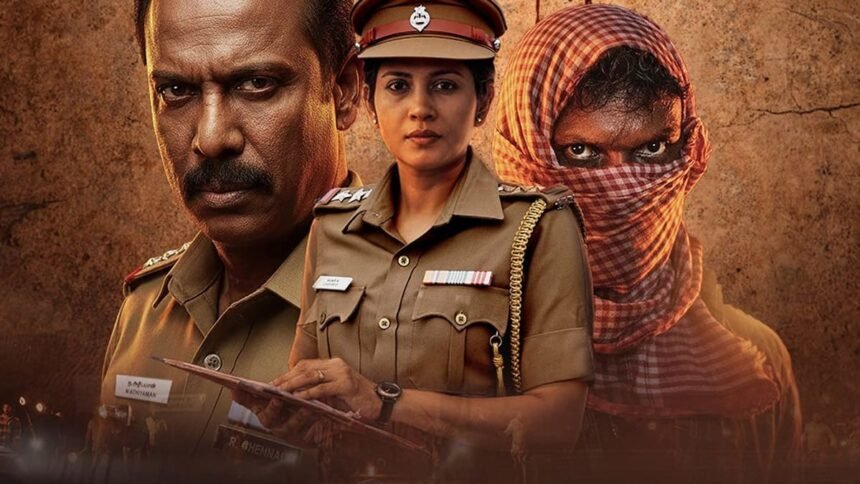
Cast: Samuthirakani, Sshivada, Raj Tirandasu
Runtime: [Not Specified]
Language: Tamil
Release Date: February 27, 2026
Verdict: 2/5 Stars ⭐⭐
Thadayam arrives with a premise that promises a gripping crime thriller: a string of ritualistic murders across the Tamil Nadu-Andhra border, a sidelined cop with sharp instincts, and a race against time. Unfortunately, the film racks up over seventy murders and still fails to produce a single interesting villain—a fatal flaw from which it never recovers.
Plot: A Trail of Murders
The film follows SI Adhiyaman (Samuthirakani), a police officer whose hunches are routinely ignored by his colleagues. When married women begin turning up dead in rural villages, their thaalis and arnakodis stolen but nothing else touched, Adhiyaman is the one who spots the pattern. Inspector Lakshmi (Sshivada) brings him into a task force, and together they chase a trail that leads into Andhra Pradesh, where 76 similar murders remain unsolved.
What Works: The Lead Performances
Samuthirakani is the film’s undeniable anchor. He carries the weight of the narrative on sheer presence alone, making Adhiyaman feel like a real, lived-in cop. His performance is enough to keep you engaged, even when the material around him falters.
Sshivada brings a quiet composure that grounds her scenes. Together, the duo shares good chemistry, and their partnership is one of the film’s few genuine assets. When they share the screen, Thadayam hints at the tighter, character-driven thriller it could have been.
What Doesn’t: Generic Villains and a Thin Plot
The film’s central failure lies in its antagonists. Suruli (Raj Tirandasu) and Ravi, the men behind the killings, are the most generic ruffians imaginable—uncouth, rough, and visually unremarkable.
Their backstory—involving police brutality and sexual assault that destroyed their family—is genuinely horrific and could have generated real sympathy. However, it is deployed as a screenwriting shortcut rather than genuine characterisation. You understand their motive in two scenes and then spend the remaining runtime waiting for a layer of complexity that never arrives.
Of the over 70 kills, only seven are actual revenge targets. The rest are innocents. This creates a fascinating moral tension: men whose grief you understand committing acts you cannot justify. It is the film’s most interesting idea. It states it and then simply moves on.
Strip away the murders, and you are left with the same fuel as a dozen other thrillers: a corrupt DSP doing an MLA’s bidding, convenient arrests to close cases, and a press conference to sell the lie. You have seen this playbook before, and nothing here tries to disguise it. The cops who aren’t corrupt are simply loud, barking orders and explaining things the audience worked out two scenes ago.
Technical Aspects: Flat and Budget-Conscious
Beyond the narrative issues, the film suffers from a visually flat presentation with thin staging, held back by what feels like a shoestring budget. Its brevity—a runtime that doesn’t overstay its welcome—is perhaps its only saving grace.
The Verdict
Thadayam is a crime thriller with a body count but no substance underneath. Strong lead performances from Samuthirakani and Sshivada provide fleeting moments of engagement, but they cannot compensate for generic villains, a thin plot, and missed opportunities for genuine moral complexity.
For fans of the lead actors, their performances may warrant a watch. For those seeking a compelling thriller, this investigation leads to a dead end.
Quick Review Summary
| Aspect | Verdict |
|---|---|
| Lead Performance (Samuthirakani) | Strong, carries the film on presence alone |
| Supporting Performance (Sshivada) | Composed, good chemistry with lead |
| Villains | Generic, underdeveloped, and uninteresting |
| Plot & Screenplay | Thin, relies on familiar crime-thriller tropes |
| Moral Complexity | Interesting idea raised but quickly abandoned |
| Visuals & Production | Flat, hampered by low budget |
| Overall | A body count with nothing underneath (2/5) |