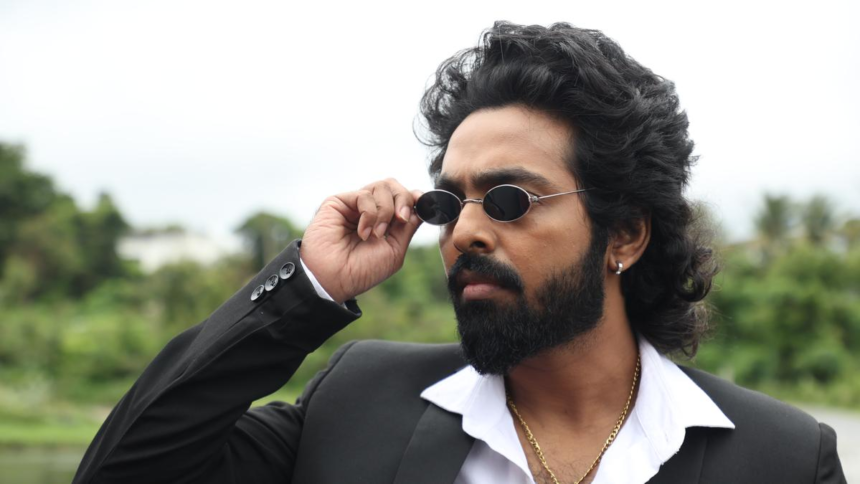
There’s a mortifying ick in watching a film that not only manipulates you to believe its token moral reversal but one that doesn’t even care to hide the practice. Happy Raj, starring GV Prakash Kumar, does somersaults through its many attempts at humour, all hinging on actor George Maryan’s physique, and hopes that its two-faced redemption in the climax would make us forgive its missteps.
It’s the oldest trick in the book. Films like Don, Dragon, and the recently released Thaai Kizhavi had redeeming qualities—good humour and organically set-up characters. However, one cannot expect anything honest in the clumsily conceived Happy Raj.
The Plot: A Father’s Shame
All the problems in Anand Raj a.k.a Happy’s (GV Prakash Kumar) life lead to his father Kathamuthu (George Maryan), whose short gait and appearance are a subject of ridicule among the townsmen. Happy grows up with shame due to this—constantly bullied because his school teacher-father’s nickname is ‘Kuthiraimuttai’ (horse’s egg), and even his college love interest breaks up with him for this.
| Character | Actor |
|---|---|
| Happy/Anand Raj | GV Prakash Kumar |
| Kavya | Sri Gouri Priya |
| Kathamuthu (Happy’s father) | George Maryan |
| Kavya’s father Rajiv | Abbas |
What Doesn’t Work: Exploitation Over Empathy
The film’s chief issue is that everything leading up to the ‘message’ feels crass and exploitative.
| Problem | Details |
|---|---|
| Body Shaming | The film uses George Maryan’s physique for cheap gags—quirky close-ups, shots of him walking out of the shower half-naked. |
| Class Exploitation | Village folks are portrayed as “barbarians who can’t take a cue” for comedic effect. |
| Tonal Hypocrisy | The film demands a redemption arc after spending over an hour exploiting the very thing it claims to condemn. |
| Weak Humor | Even jokes not about George Maryan’s looks do not induce laughter. |
The ‘I Can Fix Him’ Trope
Kavya (Sri Gouri Priya) is a textbook “I can fix him” woman who sees in Happy a man who can mend to her ways. In one of the many numbing moments, she explains how she felt sorry to see an unconfident man. The romance feels cringy and forced rather than organic.
The Climactic Contradiction
The film’s tonal change towards the end is telegraphed from miles away. Taken without context, the progressive point—arguing against body shaming and that it’s what’s within that reflects real beauty—might seem commendable. However, the director demands too much to forget the coercion endured to get there.
As the reviewer notes, “even the film seems to believe that George Maryan is more suited for such humour than Abbas.” This hypocrisy undercuts any moral high ground the climax tries to claim.
What Could Have Been
There are moments of heart—scenes between Kathamuthu and Rajiv on a riverbank, or the central father-son dynamic—that make you wish for a better draft, one that took its endeavour more honestly with wittier jokes. It would have then truly been a Happy Raj.