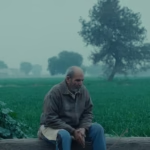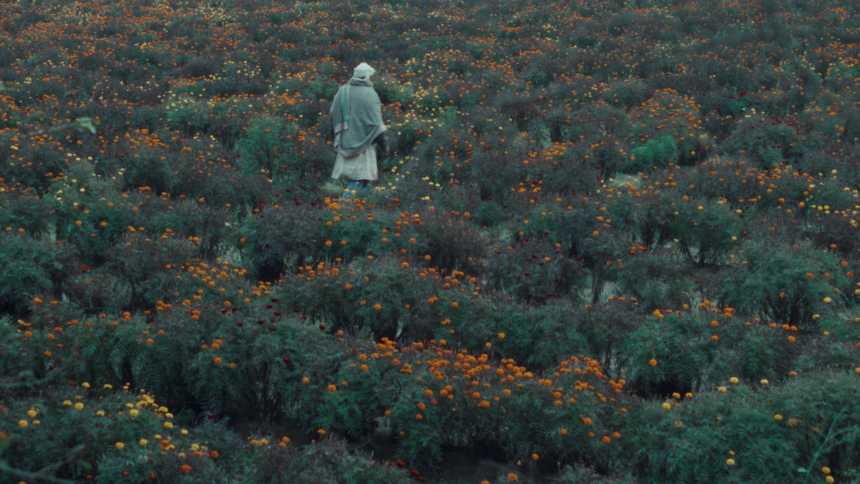
Faridabad, India – A haunting, fog-draped requiem for a vanishing way of life, young Ankur Hooda’s Khal Bachhda (The Calf Doll) allegorically critiques what is sacrificed on the altar of progress. After winning international acclaim at its world premiere at the Copenhagen International Documentary Film Festival, the independent film in Haryanvi is one of eight selected for the prestigious documentary competition at the upcoming 70th BFI London Film Festival. Set in Dayalpur village near Faridabad, the hybrid para-fiction drama breathes through Satbir Singh Hooda, an elderly retired teacher. When his only cow delivers a stillborn calf and stops lactating, his quiet world tears open. Desperate to stave off losses, the educated farmer is left with no choice but to descend into a forbidden rural ritual where a lifelike doll from the skin and body of the dead calf is crafted to trick the grieving mother into producing milk.
As he stitches the calf back together, deeper anxieties about identity and the exploitation of the aging peasantry surface. Their children have moved to the cities, leaving them at the mercy of profit-seeking middlemen, armed with oxytocin injections, urging farmers to liquidate their assets and tear off their emotional bond with the livestock. “The practice of calf doll still exists. In northern India, it is mostly done with buffaloes, partly because of religious beliefs around cows and also a local belief that cows are smarter and a calf doll usually does not work on them. It is a banned practice, but a cost-effective way for the villagers to keep milking the cow after a calf’s death,” relates the 25-year-old, who has cast his grandparents as themselves.
Must Read:
Influenced by Turkish legend Nuri Bilge Ceylan, the self-taught filmmaker’s imagery of rural life and relationships is shaped by devouring Premchand and Chekhov. “One winter noon in my village, I saw my grandfather sitting alone, gazing at the neighbour’s cow with a childlike desolation after having sold his own herd reluctantly. It made me wonder what is left of you when you no longer possess what has defined your entire life? That question became the seed,” Ankur says. He consciously abandoned the idea of a script and intuitively improvised everything while interacting with the real spaces and characters of his village every day, shooting in DIY fashion on small personal DSLRs with lights and rigs made at home. For Ankur, the film is a prologue to a longer exploration of the region through a trilogy. “I’m interested in quietly documenting that dissonance between people and landscapes that are slowly fading as inevitable modernity moves in,” he says.