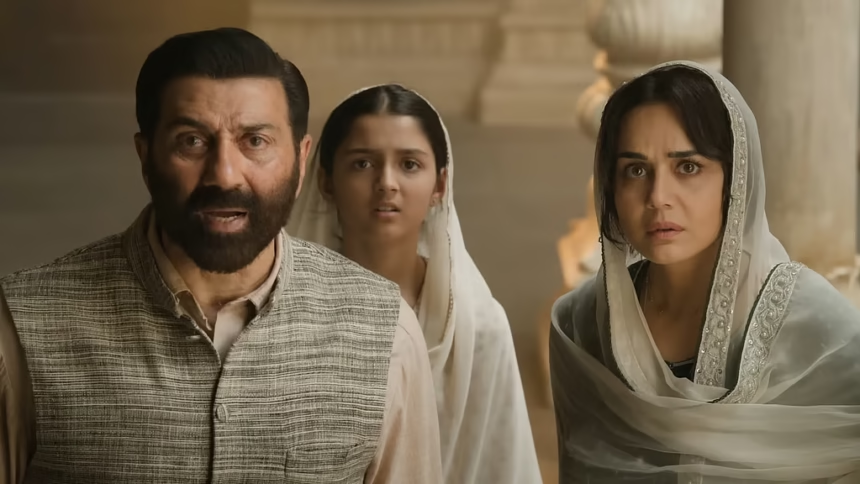
Mumbai, India – Rajkumar Santoshi’s Batwara 1947 is a daring Partition-era drama that stages a Sunny Deol-sized plea for humanity. The film, produced by Aamir Khan, follows Sikandar Mirza (Sunny Deol), a prosperous Muslim family man forced to flee from Meerut to Lahore during the blood-soaked Partition. When they are allotted a house, they discover an old Hindu woman (Shabana Azmi) still living upstairs, refusing to leave. Mirza, his wife (Preity Zinta), and his daughter overcome their biases and treat her like family, drawing the ire of their community. The premise is brave, and the message is chaste: compassion over religion.
The film unfolds as a violently blatant melodrama, with direct, commercial language and pointed lines like “Don’t mix politics and religion, it destroys everything.” Mirza lectures his surroundings about the tenets of Islam and, when all else fails, yells that motherhood is the most universal religion. The hatred is frightfully familiar, and the partitions persist. However, the film’s problems are also familiar. It relies heavily on its message, but the heart-is-in-the-right-place syndrome makes it feel simplistic. The courage of the film is more moving than the film itself, and in a year of pacifist themes like Ikkis and Main Vaapas Aaunga, the message alone is not enough.
Batwara 1947 looks and sounds like a school play with a Bollywood budget. The performances, except for Shabana Azmi and Ali Fazal, are basic, and Lahore looks like a parody of itself. The good-Muslim-bad-Muslim trope is overt, with the villain’s henchmen sporting fake moles and lipstick. The climax, however, works wonders, with Bollywood melodrama calibrated to milk the correct emotions.
Must Read: Karnataka Forest Killing Revives Memories of 2015 Massacre of 20 Tamil Woodcutters in Andhra
Sunny Deol’s Mirza is a mix of the single-screen superstar and the son of a superstar. He tries to reason first, but when that fails, he goes Full Sunny Deol—2.5-kilogram hand wreaks havoc, tempers fly. To Deol’s credit, he allows his trademark volume to be defeated by the hush of altruism, but the film pummels its love into submission, making the irony contemporary.